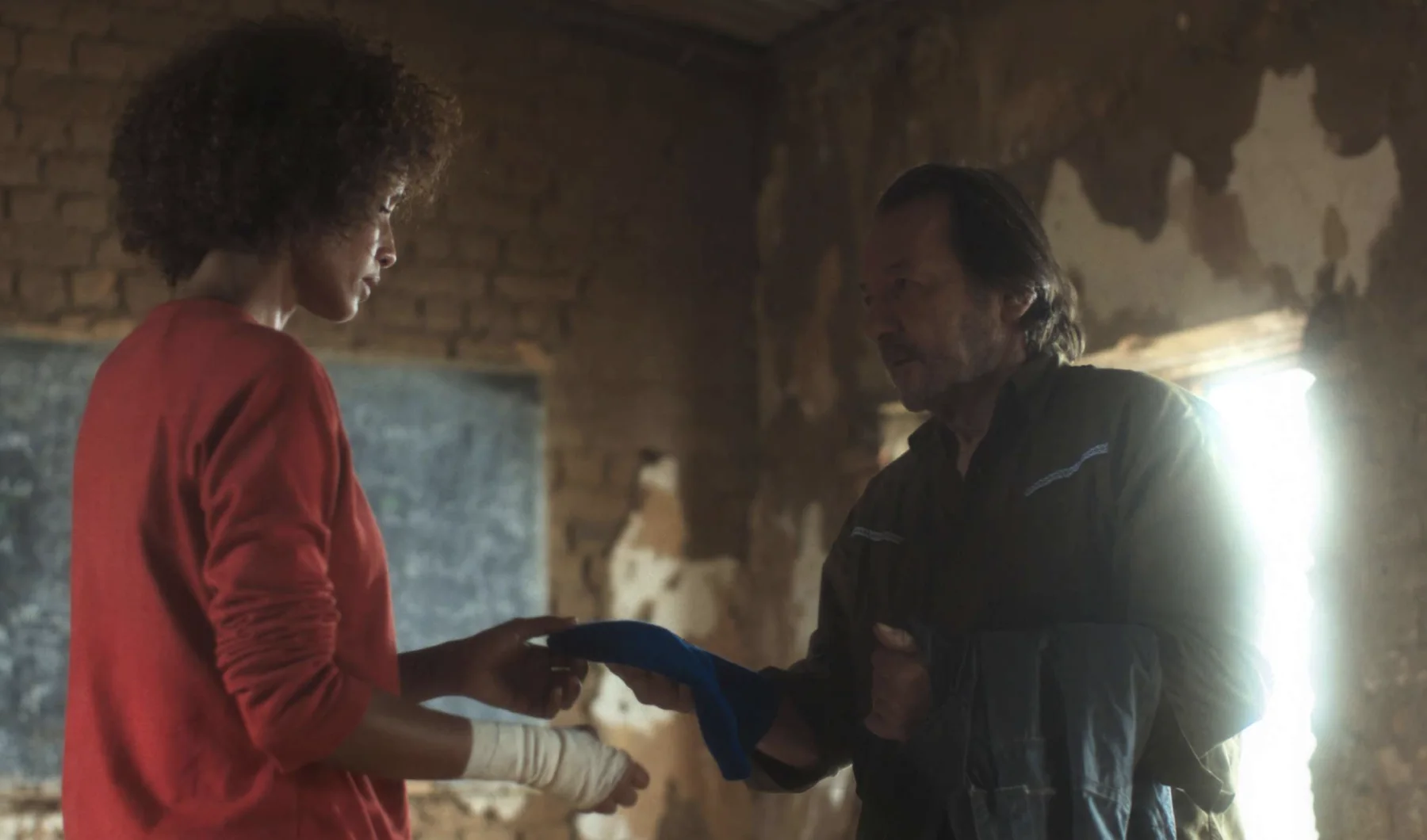
Some films take us back to 1994. Others insist that we stay in the present. Kwibuka belongs to the latter. Hotel Rwanda by Terry George and Sometimes in April by Raoul Peck plunged us into the hundred days. Jonas d'Adesky takes another, perhaps more uncomfortable, path: he starts from a personal story of today and slowly works his way back to History.
A Three-Pointer From Memory
Lia, a French-Rwandan basketball player, is invited to join Rwanda's national team for the African championship. On paper, it is a sporting offer. A tournament, training sessions, a jersey. Sports films know the tune: there will be doubts, a demanding coach, a decisive game and, in all likelihood, a slow-motion shot as the ball leaves her hands.
Kwibuka has other plans. Returning to the country she left as a child stirs up everything Lia had carefully put away. The basketball court becomes a strange place: the only spot where the rules are clear, in a country where nothing about the past truly is.
Beginning With Words
The film opens on a form of gacaca, the community courts set up after the genocide, where a survivor testifies alongside the prisoner responsible for the death of her family. The scene seems worlds away from the life of a European athlete. It is, in fact, the key to the film.
Everything here rests on that gesture: standing next to the unthinkable and speaking. Not to excuse. Not to forget. To name. Rwanda rebuilt itself on the almost dizzying idea that dialogue, even with those who killed, could be the beginning of something else. Kwibuka, which means "to remember" in Kinyarwanda, never turns that idea into a slogan. It shows its cost.
A Witness, Not a Lesson
What is striking is that the film never moralizes. It would have been easy, almost comfortable, to hand out roles. The genocide against the Tutsi had its perpetrators and its victims, and the film never blurs that truth. But at the level of individuals, among descendants, within families, inheritances are less clear-cut.
What one did to survive.
What one kept quiet to protect others.
What one does not know about one's own parents.
This is where Kwibuka reaches something universal. It does not say that everything is equal. It says that the aftermath of a genocide is a moral grey zone in which men and women had to make choices no manual ever anticipated.
The film is not a tribunal. It is a witness.
Sonia Rolland, on Familiar Ground
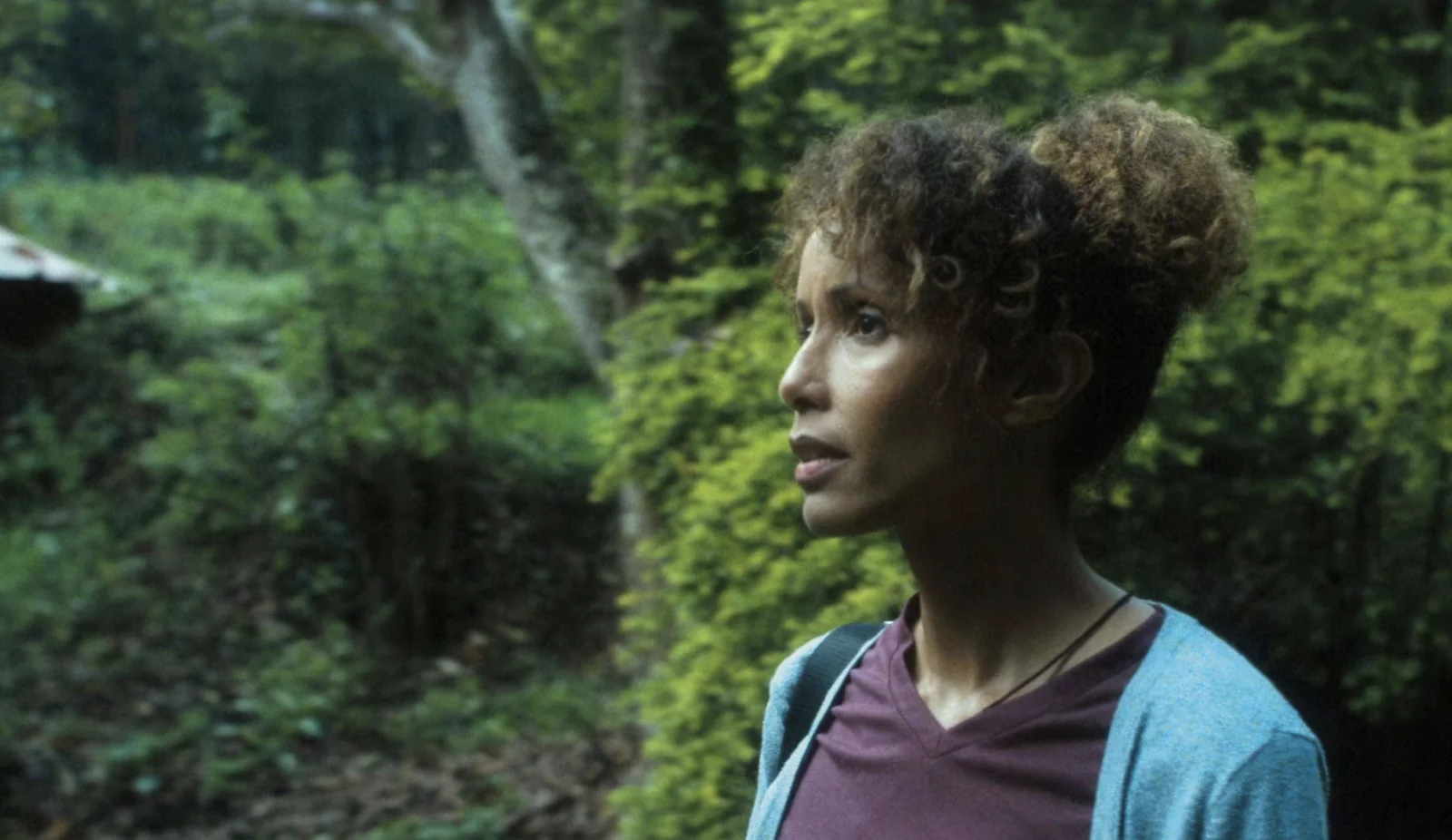
The casting is no accident. Like Lia, Sonia Rolland was born in Kigali to a Rwandan mother and a French father and grew up in France. Before becoming Miss France and then an actress and director, she played basketball. She has also devoted two documentaries to her native country, Rwanda, du chaos au miracle and Femmes du Rwanda.
One might fear that such closeness would crush the character. The opposite happens. Her performance is precise, restrained, free of effects. So is her game on the court, which is no small matter: few sports films can boast a lead whose shot needs no help from the editing room. The director says she sometimes forgot she was playing a part. On screen, we forget along with her.
The scenes with Rwanda's national team carry a closeness that cannot be rehearsed. You feel bodies that know each other, laughter, shared fatigue.
A team is also a small nation: you learn to play together with people you did not choose.
A Father, a Mystery
Opposite her, Jean-Hugues Anglade plays Christian, her father. Their relationship carries the film with tact. Anglade plays a man who knows more than he says, and who may have turned his silence into a form of love, or of escape, or both. The film does not decide. It lets the mystery do its work, as in every family where someone once decided it was better not to talk about it.
This intimate thread echoes the filmmaker's own. Jonas d'Adesky, who is Belgian-Rwandan, recalls finding his grandmother in Rwanda, a woman the family believed had been killed in the genocide.
The film is not autobiographical. But it has the accuracy of those who know what they are talking about.
A Literary Cousin
Leaving Kwibuka, it is hard not to think of Gaël Faye. Born to a French father and a Rwandan mother, the author of Small Country has made this double belonging the very substance of his work. In Jacaranda, winner of the 2024 Prix Renaudot, Milan, a young French-Rwandan raised in Versailles, discovers his mother’s country and its silences, as Rwanda tries to rebuild itself between memory and gacaca.
The novel and the film seem to answer each other. Same generation, same journey back, same question put to the parents: what did you not tell us? For Faye as for d'Adesky, the genocide is not discovered in history books. It is discovered in what is missing from a family conversation.
There is now a generation telling Rwanda's story from the aftermath.
And it has a great deal to ask.
The Long Haul
Kwibuka invites us into life after. We often speak of genocides in the past tense, as closed events. The film reminds us that they last far longer than the massacres: in families, in trials, in neighbours one must face again, in children who ask questions.
There is a lesson here for those living in countries where hatred is beginning to speak calmly, on television or over dinner, and another for those who have already lived through the worst. To the first, it shows what must be avoided before it is too late. To the second, it recalls that words, even with the worst, can be the beginning of renewal.
Remembering is not looking back.
It is the only way to move forward without stumbling.